The Learning Circle · School Leadership · Episode 25
How One Leader Leads 7,000 Students Across 5 Campuses
Dr. Seetha Murty, Director at Silver Oaks International Schools, Hyderabad, on the Homegrown Leadership Model, why she doesn’t believe in SOPs, and what parents actually notice when a school is working — drawn from 21 years running schools at scale.
The video loads only when you press play — no third-party cookies are set before that.
The short version
For school leaders: how a shared standard travels across campuses when the leader cannot physically be there.
Dr. Murty runs five campuses and 7,000 students on a principle she calls Homegrown Leadership: principals are promoted from within rather than hired in, so the person leading a campus already carries its culture rather than importing a new one.
Her sharpest position is against standard operating procedures as the default management tool. Where SOPs try to script behaviour, she argues for building shared mission and understanding people instead — rules can’t anticipate every classroom, but a teacher who understands the “why” can. As she puts it in the episode, teachers “are not your subordinates, they’re your team.”
The conversation moves from mission over presence, to getting reluctant teachers on board, to what parents actually notice when a school is functioning well — closing with a message to students and the line the episode is titled around: leadership, stripped of hierarchy, is a responsibility you carry alone.
Six things worth taking away
The paradox underneath all six: the bigger the system got, the less her physical presence could hold it together.
Shared mission beats physical presence.
A leader can’t be on every campus at once. What travels in her absence is a mission the staff have actually internalised, not a set of instructions waiting to be enforced.
Homegrown Leadership: promote from within.
Principals who rise through the system already understand its culture, its people and its constraints — they don’t need to be onboarded into the mission, because they helped carry it.
Skip rigid SOPs — understand people instead.
Her stated reason for not leaning on standard operating procedures: they standardise behaviour without building the judgment to handle what the procedure didn’t anticipate.
Every teacher is a leader in their own classroom.
Treating teachers as a team rather than subordinates changes how much ownership they take of outcomes — the framing she returns to repeatedly through the episode.
The standing test: “Is this right for students?”
A single question used to cut through competing priorities when a decision gets complicated.
Two moments from the episode show that test being applied to decisions that look small on paper.
And a second, where the same question produced a very different answer from the obvious one.
What parents actually notice.
Not the policies on paper, but signals that are harder to fake — covered in the “What parents notice” chapter of the conversation.
What follows from that, in her account, is the part schools rarely measure.
Chapters
Every timestamp opens the episode at that moment.
In her words
“People, they’re not your subordinates, they’re your team.”
“Hierarchy is a myth. Power is a myth. Leadership is a responsibility. And you’re alone.”
Who this is for
Where the thread leads
The conversation ends wider than it starts. These last four panels step back from the individual practices to the system they add up to.
Asked what the next decade asks of schools, Dr. Murty does not answer with structures or technology. Her answer is about the kind of judgment a school builds in its people before the situation arrives.
The compass she describes is deliberately simple. When priorities compete and the decision gets complicated, one question settles it — the same question she applies everywhere else in the system.
Seen together, the pieces stop looking like separate policies. Mission, homegrown leaders, teacher ownership and the habit of reflection each hold the others up.
Which is what the invisible thread actually is: not a chain of command reaching five campuses, but a shared understanding that keeps working when the leader is not in the room.
Visual companion built from this conversation, for anyone who would rather skim the framework than watch the full episode.

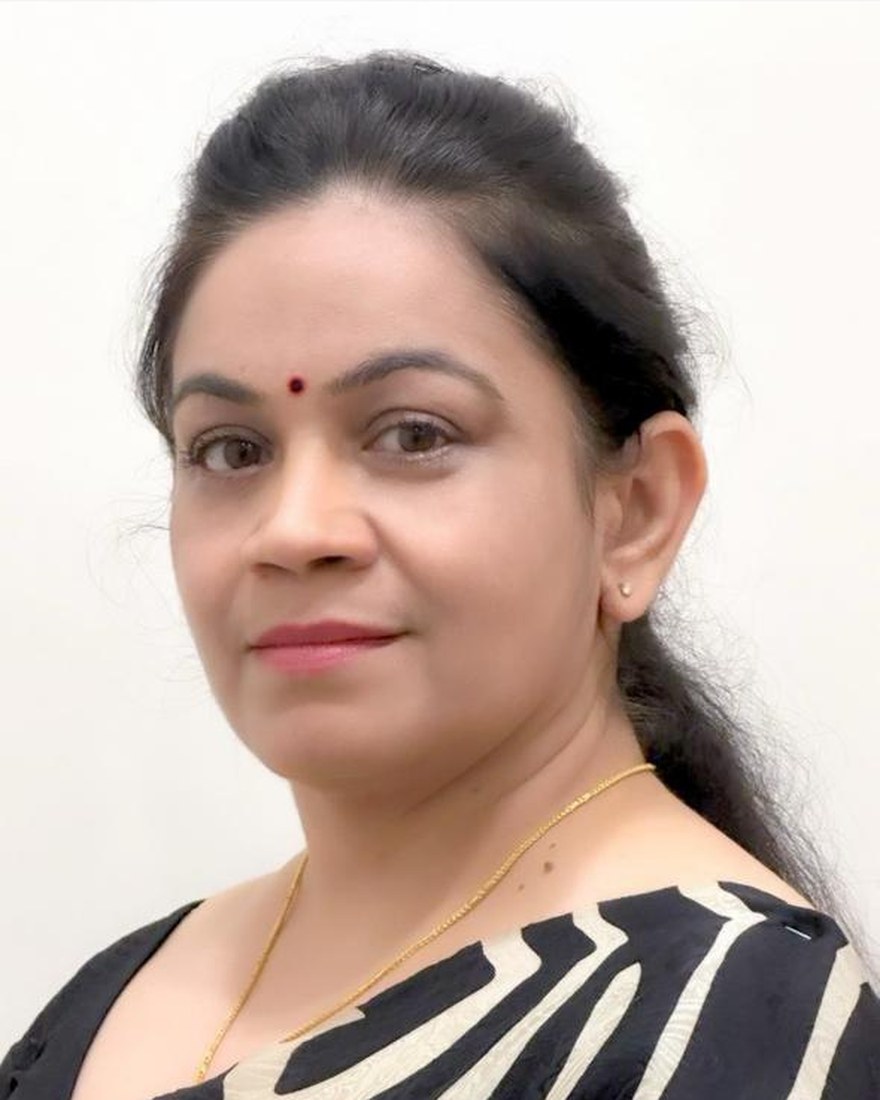
Dr. Seetha Murty
Director, Silver Oaks International Schools, Hyderabad
Dr. Murty oversees 7,000 students across five campuses at Silver Oaks International Schools. With 21 years in education, she champions “character first, competence next” through people-focused systems rather than rulebooks — the Homegrown Leadership Model discussed throughout this episode.
Guest bio drawn from the episode’s own description, as published by the channel. Verify current title and campus count before republishing elsewhere, as these details change.
For Dr. Murty — and anyone who wants to feature this conversation
Everything you need to put this episode on your own site, press page or portfolio. No permission required; a link back is all we ask.
Embed the player and a link back
A one-line description you can reuse

Questions this episode answers
What is leadership beyond presence?
Building a culture strong enough that leadership keeps working even when the leader isn’t physically there — the core distinction Dr. Murty draws between mission-driven and presence-driven leadership.
How do you lead multiple campuses?
Through shared mission, internal promotion of leaders who already carry that mission, and prioritising the “why” behind a decision over a fixed SOP.
What makes a great school leader?
Reflection, a focus on people over process, and genuinely empowering teachers rather than managing them as subordinates.
What is Homegrown Leadership?
Promoting principals from within the system rather than hiring externally, so the people leading a campus already understand and carry its culture forward.
About this page. This summary is built from the episode’s own chapters and description, plus two short quotes taken directly from the recording. It isn’t a full transcript. Watch the complete conversation on YouTube for the full context.
These conversations inform the method
The frameworks used in school workshops are tested against the people building the field. If you want that thinking in your staffroom, start here.