AI Workshops, Keynotes & Webinars for Schools
AI that sharpens teacher judgment instead of replacing it.
Kavleen Kaur Bhatia helps schools build thoughtful, reliable AI practice through tailored workshops, leadership sessions, keynotes and webinars. Her IMPACTS Method gives educators a repeatable way to use AI as a thinking partner, strengthening professional judgement rather than bypassing it.
The School-Leader Challenge
Your teachers may already be using AI.
The question is whether they have been trained to use it well.
AI use is already happening across schools. However, without a shared approach, the quality, safety and educational value of what teachers produce can vary widely. A tool demonstration is not enough. Teachers need a practical way to question, evaluate and improve AI outputs using professional judgement .
What Your School Gains
Sharper professional judgement
Teachers make clearer decisions about what a lesson, resource or assessment actually needs before using AI.
Better ideas and stronger design
Teachers surface more useful angles, options and design choices than they would working alone.
Quality your school can stand behind
Staff evaluate AI-supported material against shared educational standards — not simply accept the first output.
Richer teaching, in each teacher’s voice
Teachers develop more varied, relevant material while retaining subject expertise, context and professional voice.
Reusable systems, not one-off prompts
Your teams leave with adaptable workflows and resources that continue to save time and improve practice.
Sustainable school-wide AI practice begins with stronger professional thinking.
The IMPACTS Method
A seven-step, judgement-led process for using AI well in education.
A structured way to work with AI, built for educators. Teachers form their professional judgment first and execute on it, so what they produce carries their standard from the start — and the method closes by turning what worked into something the school keeps. It is tool agnostic by design, so it holds whether staff use ChatGPT, Gemini, NotebookLM, or whatever arrives next.
Identify
Define what the work actually needs, and why, before opening any tool — including the ethical check that no student-identifiable information goes in.
Mine
Ask AI what you have not thought of — misconceptions, question formats, what changes for learners needing support or extension — before asking it to produce anything.
Prompt
Turn that thinking into a brief rather than a request: purpose, requirements, format, differentiation, and what to avoid.
Assess
Judge the output against criteria set in advance — purpose, reasoning over recall, factual accuracy, age-appropriate language, classroom realism.
Calibrate
Correct with precision. Numbered, specific instructions rather than “make it better”, which only produces a different draft of similar quality.
Tune
Decide when it is genuinely ready — avoiding both over-iteration and putting substandard work in front of children.
Systematise
Separate what is permanent — grade, rubric, tone, format, standards — from what is occasional, and install the permanent layer once.
Six of seven steps sit outside the prompt
Only one of the seven steps is prompting. The rest is thinking with AI before giving the prompt and then professional judgement after AI produces the artefact.
A repeatable process
The same reliable sequence whether staff are planning a unit, designing assessment, or preparing remedial material.
Output your school can stand behind
Work that carries professional standard, because judgment shapes it before AI ever generates.
Effort that accumulates
Reusable systems rather than repeated conversations, so what staff build keeps paying back.
For Schools
Build a shared standard for AI across your teaching team.
Commissioned workshops, including leadership sessions, keynotes and webinars, adapted to your school’s subjects, year groups, current tools and real implementation questions.
- A shared method staff can use, discuss and review
- Practical work on real lessons, assessments or learning materials
- Clear standards for evaluating AI-supported outputs
- Clear, age-appropriate guardrails for where students may use AI — and where the independent thinking must remain theirs
- Reusable workflows that continue beyond the session
- A position on AI the school can defend to parents and boards
What your school receives — before, during and after.
Before
- A scoping conversationWith school leadership — which tools are already in use, which subjects and year groups are involved, and where the real pressure sits.
- A written session outlineShared with academic leadership in advance, so the scope, outcomes and delivery plan are clear.
During
- A workshop built on IMPACTSApplied to your context rather than delivered off a shelf.
- Subject-relevant examplesBuilt for your departments and year groups, not generic demonstrations.
- An explicit conversation about guardrailsWhere AI supports learning, and where it quietly replaces the thinking a student needs to do.
After
- Something reusable to take awaySo the method is still in use in week six, not just on the day.
- An optional leadership follow-upReviewing what has held in practice and what needs adjusting. Quoted separately.
Sessions run for a department, a year group, your academic leadership, or a larger cohort — group size is not a constraint. The final shape is agreed during scoping, based on your staff size, objectives, available time, and whether delivery is in person or online. Applicable across CBSE, ICSE, IB, Cambridge and state-board contexts, as well as international school settings.
How It Runs
How a school engagement works.
Designed around your staff, your subjects and the teaching work already underway.
Adapt
A conversation beforehand establishes which tools are already in use, which subjects and year groups are involved, and where the real pressure sits. The session is built around that.
Work
A working session, not a lecture. The method is applied to real material — the unit being taught next week — so participants leave having built something usable.
Systematise
The closing stage turns what worked into reusable components embedded in normal workflow. This is where most AI training quietly fails, and where the method is designed to hold.
Evidence From the Room
Built for use after the workshop — not applause during it.
89 to 91%
of participating teachers reported they intended to apply the method immediately.
DPS Vasant Vihar, New Delhi10/10
respondents rated the session valuable. 60% rated it extremely valuable and said they would use it right away.
Indraprastha International School, Dwarka100%
positive feedback across the full teacher cohort at the flagship NCR session.
DPS Vasant Vihar, New DelhiFigures are from post-workshop feedback surveys at the schools named. Each result is reported against its own session rather than combined into a single aggregate claim.
About Kavleen
Practical AI implementation,
grounded in how schools actually work.
Kavleen Kaur Bhatia is the founder of Credo Learnings and the creator of the IMPACTS Method. Before moving into education, she spent 15 years at Tata Consultancy Services leading structured software implementation, quality review systems and professional training at scale. Rigor was not optional. The systems had to work.
When she moved into education, the contrast was obvious. AI was entering classrooms faster than anyone could standardise its use, and educators were being handed tools without method. Her work now helps schools develop AI practice that is thoughtful, consistent and usable well beyond a single workshop.
Full background and credentials
- 15 years, Tata Consultancy Services, software implementation and professional training
- Executive Management Program, IIT Bombay
- AI in Education: Leveraging ChatGPT for Teaching, OpenAI and Wharton Online
- AI for Everyone, DeepLearning.AI
- MCA, with B.Sc (Hons) Physics
- Host, The Learning Circle podcast, conversations with education leaders
Credo Learnings
Credo Learnings exists to close the gap between AI arriving in classrooms and schools having a method for it. The aim is straightforward: build something reliable enough that it is still in use in week six, not just on workshop day.
On Stage
Keynotes and webinars that move beyond AI hype.
Kavleen speaks to educators, school leaders and learning communities about using AI with professional judgement, building meaningful teacher capability, and creating school-wide practice that lasts.
- AI as a thinking partner for educators
- Building teacher judgement in an AI-enabled school
- From AI experimentation to shared school practice
- Student agency, assessment and sensible AI guardrails
- What school leaders need to get right before scaling AI

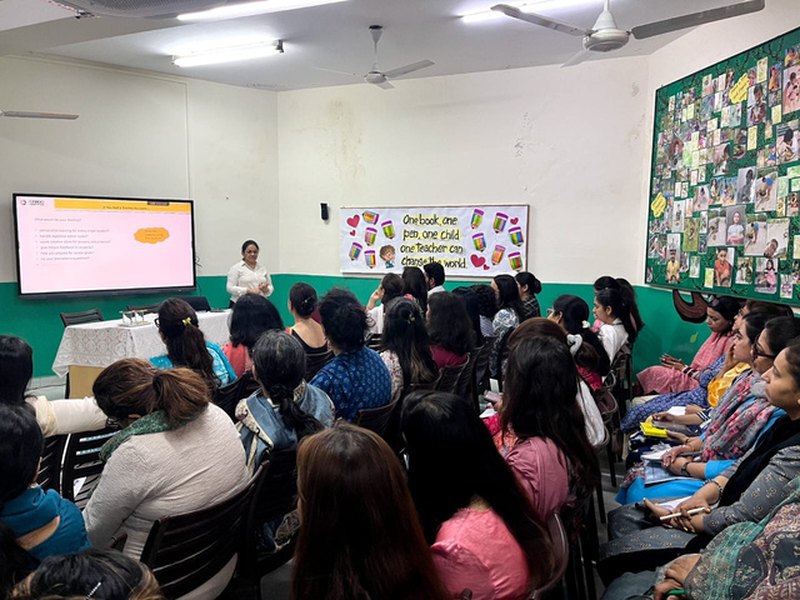

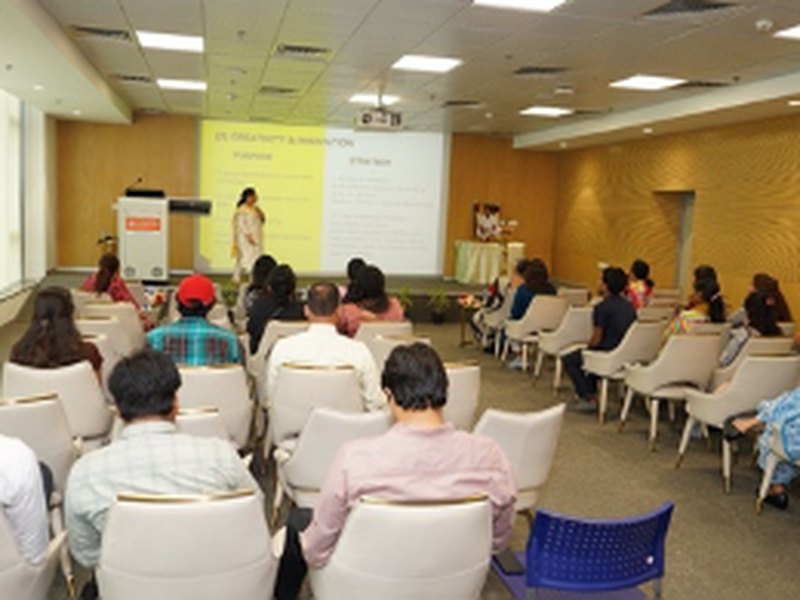
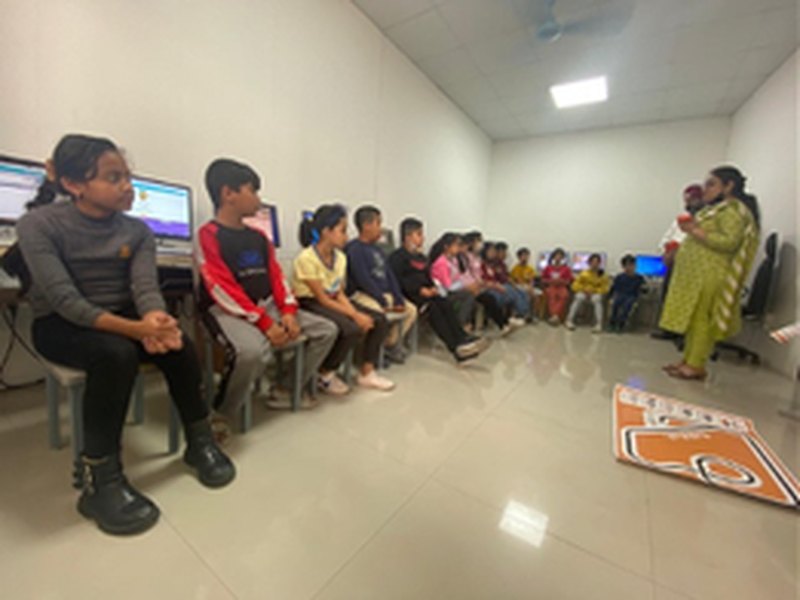

Available for in-person and virtual engagements, for schools, school groups, conferences and education networks.
The Learning Circle Podcast
Conversations shaping the future of education.
Kavleen speaks with school leaders, educationists and policy thinkers about AI, teaching, leadership and the changes reshaping K–12 education. It is how the method stays current, tested against the people building the field.
Dr Ashok K. Pandey
Advisor, GEMS Education India; former Director, Ahlcon Group of Schools. Why India's schools have a mentoring problem, not a training problem - and the ROI case for investing in teachers.
EpisodeAnustup Nayak
Classroom Instruction Practices & Early Childhood Education, Central Square Foundation. Why 70% of children struggle to learn, and how structured pedagogy is changing that across 11 states.
EpisodeMs Aditi Misra
School Director, DPS International, Gurgaon. Why parents are the key to education success - conflict resolved by conversation, and the traits children imbibe rather than get taught.
EpisodeDr Seetha Murty
Director, Silver Oaks International Schools. Why she doesn't believe in SOPs, and how a Homegrown Leadership Model keeps standards consistent across 5 campuses and 7,000 students.
EpisodeLt Gen Surendra Kulkarni
Leadership and resilience educator, retired Indian Army. Controlled adversity, responsibility over protection, and why leadership skills - not just grit - build resilient kids.
Insights
Practical thinking for schools navigating AI.
Notes on AI in education, school leadership, and what structured practice actually looks like in a classroom.
Why AI Training in Schools Fails, and What to Do Instead
Why one-off AI workshops often fail to become sustained classroom practice, and what more effective teacher AI development looks like.
School LeadershipCBSE CT and AI Curriculum: What Schools Must Actually Do
CBSE introduced CT and AI for Classes 3 to 8 from 2026-27, at 50 to 100 hours a year. The syllabus is the easy part.
AI PracticeAI Use by Teachers in India: What the Data Actually Says
Over 70% of Indian teachers use AI, but only 57% can spot a basic AI misconception. Where the real gap sits.
Frequently Asked
Direct answers
What does it mean to use AI as a thinking partner?
Most AI use starts at execution. You open a chat, ask for a lesson plan, and accept what comes back. Using AI as a thinking partner reverses that order. Before generating anything, you use AI to surface the design choices hidden in the task, such as what the class actually needs, which misconceptions are likely, and what a good outcome would look like. Only once that thinking is clear does AI become an execution partner that drafts and iterates. This sequence is the core of the IMPACTS Framework and is what separates it from prompt training.
What is the IMPACTS Framework?
The IMPACTS Framework is a structured methodology developed by Credo Learnings for professional AI use in education. It gives educators a repeatable way to work with AI that starts with thinking rather than prompting, holds their professional standard through execution, and ends with reusable systems instead of one off conversations. It is tool agnostic by design, so it remains valid as AI tools change.
What does building reusable systems with AI actually mean?
It means moving beyond one off conversations. Instead of starting from a blank chat each time, you turn a working approach into a reusable component such as a configured assistant tuned to your subject and assessment style, a differentiation workflow matched to your class profile, or a review process that can be applied to any unit. You build the asset once and use it across the year. This is where most AI training stops short.
How is this different from generic AI or prompt training?
Prompt training teaches what to type. It stops working when the tool changes or the task differs from the example. This training gives you a system for working with AI, built on the IMPACTS Framework from Credo Learnings. You learn to establish professional intent before generating anything, draw out information you did not know to ask for, hold output to your own standard, and build reusable systems. Because it is tool agnostic, it holds across ChatGPT, Gemini, NotebookLM, or whatever comes next.
Is this for individual teachers or for whole schools?
Both, though at present new bookings are being taken for whole schools. Individual teachers can join the newsletter to stay in touch. Schools can commission the workshop for their full teaching staff. This creates a shared standard across departments, practice that academic leadership can review, and an agreed approach to student AI use. The underlying method is the same in each case.
Will AI use undermine student thinking?
That risk is real and the workshop addresses it directly. A core part of the training is establishing clear guardrails on where AI supports learning and where it quietly replaces the thinking a student needs to do themselves. Participants leave able to design AI assisted tasks that preserve student agency rather than bypass it.
Does the training support implementation of the CBSE Computational Thinking and AI curriculum?
Yes. CBSE introduced its Computational Thinking and Artificial Intelligence curriculum for Classes III–VIII from the 2026-27 session, with computational thinking integrated into existing subjects rather than taught separately. Where relevant, a school engagement can include implementation support for teachers: translating the curriculum into classroom practice, using CBSE’s own teacher resource books thoughtfully, and building staff confidence with computational thinking, AI literacy and age-appropriate learning activities.
Who is Kavleen Kaur Bhatia?
Kavleen Kaur Bhatia is an AI trainer for educators and founder of Credo Learnings, based in Delhi NCR, India. She spent 15 years at Tata Consultancy Services leading structured software implementation and professional training before moving into education. She holds an MCA and a B.Sc (Hons) in Physics, with executive education from IIT Bombay and AI certification from OpenAI and Wharton Online. She hosts The Learning Circle podcast on K-12 education transformation in India.
What does a school need to prepare before a workshop?
No major technical preparation is required. Before the engagement, we identify the staff group, teaching priorities, existing tools and the real materials participants will work with. The session is then tailored to that context.
Ready to Begin?
Bring thoughtful, practical AI capability to your school.
Tell me about your staff, context and goals. I will respond with a brief for a workshop, keynote or webinar suited to your school or event.
For schools, school groups, conferences and education networks. Available in person and online.